Looksmax - Men's Self Improvement Forum

Welcome to the ultimate men’s self-improvement community where like-minded individuals come together to level up every aspect of their lives. Whether it’s building confidence, improving your mindset, optimizing health, or mastering aesthetics, this is the place to become the best version of yourself. Join the hood and start your transformation today.

Guide Understanding and Identifying Phenotypes (1 Viewer)

Guide Understanding and Identifying Phenotypes

FoidSlayer

we will all ascend
Joined
Dec 15, 2025
Posts
1,240
Reputation
3,152
This is water but I'm bored so let's get into it:really::pepecheers:

1000000903.jpg


Understanding and Identifying Phenotypes

By FoidSlayer
________________________________________________

Table of Contents:

Introduction
Pigmentation
Facial Features
Eyebrows
Height/Body Measurements
Cephalic Index
Robustness
Facial Index
Nasal Index
Hair
Conclusion
___________________________________________________


Introduction:

What is a phenotype?
A phenotype is a set of characteristics that make up ones appearance, that is determined by ones genotype (genetic makeup). And is also influenced by environmental factors, such as lifestyle,climate and diet. Now knowing this it is safe to say that phenotypes are responsible for constructing and catagorizing human populations into racial groups. In this thread I will tell you how to distinguish between different phenotypes.

Pigmentation:

Pigmentation can be a good characteristic when determining phenotype, darker skin evolved to take in less UV in regions around the equator while lighter skin evolved from places further away from the equator in order to take in more UV.
1000000904.jpg


Type 1 (Pale/White): Never tans always burns

Type 2 (Fair/Light): Tans poorly burns frequently

Type 3 (Darker White/Olive): Tans after initial burn

Type 4 (Light Brown): Tans easily and burns minimally

Type 5 (Brown/Dark Brown): Tans very easily and barely ever burns

Type 6 (Dark Brown/Black): Tans profusely and never burns

Pictured above is the Fitzpatrick scale and it is a useful tool for identifying phenotypes as it can be used to track location of origin in many people

Very Dark
(Tropical/Equatorial)

Dark Brown
(Tropical/Savannah)

Light Brown/Olive
(Sub-Tropical/Temperate)

Fair/Pale
(High Latitude)

1000000905.jpg

1000000906.png


Skin undertones are also a good indicator, Europeans often have red/rosy undertones and yellow/olive undertones as well. Non-Europeans can have a wide range of undertones ranging from beige, brown and grey.

Also eye color can be a good symbol when determining levels of melanin which can help when Identifying.

Facial Features:

The nose is very important when identifying, in order to identify you would want to look at the base of the nose, the overall shape of it and the contour.

1000000907.png


Another facial feature that can help when Identifying are eyes, look at the folds and the shape of them (Ex: Most Asians having monolids).

1000000908.jpg


Eyebrows:

Eyebrows are also a useful tool when identifying (not as useful as other methods discussed in this thread but still useful).

Eyebrow Thickness and Density:
The EDAR gene is linked to eyebrow thickness specifically in Asian populations and also research shows that African women often have lower hair density in their eyebrows.
1000000909.jpg
1000000910.jpg

Shape and Structure:
Indian women are known to have longer eyebrows according to research, however Chinese and Japanese women are prone to having more straight eyebrow shapes.
1000000911.jpg
1000000912.jpg

Color Variety:
Coloring in the eyebrows are a good indicator when determining melanin levels l, just like eye color and pigmentation this is a good symbol when identifying.
1000000914.jpg

Eyebrows are highly customizable and they vary a lot from person to person so while it is a tool you can use to identify, there are better tools out there for sure.

Height/Body Measurements:

Arguably one of the lesser important metrics when determining phenotype, This metric can be linked to robustness though.

More Reduced Types:
Usually skinnier and have an easier time putting on fat while also having a moderate to shorter stature (alpinid phenotype).
1000000915.jpg

More Robust Types:
Often identified by their thicker bone structure, an easier time putting on muscle as well as a wider frame (nesiotid phenotype).
1000000917.jpg

1000000920.jpg


This is also apparent when we see that one ethnic is taller than another one on average (Ex. White people usually being taller than most Asians). However this overall isn't the best metric when identifying because of everyone's individuality in this field.

Cephalic Index:

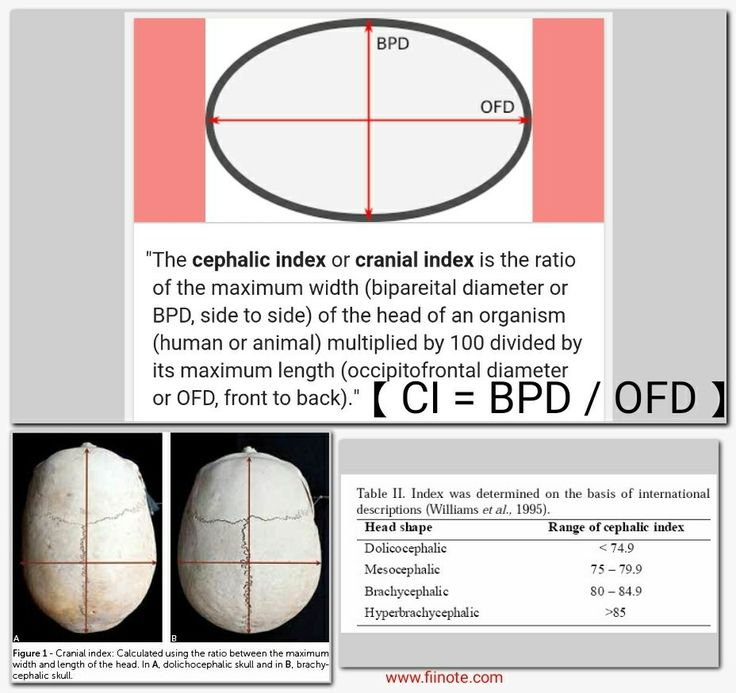
This is an important measurement that can indicate robustness or reduction like we talked about in the last section. Now I will share the formula on how to get the cephalic Index (CI).

Width (Biparietal Diameter)
CI = ________________________________ X 100
Length (Occipitofrontal Diameter)

1000000921.jpg


Measurements are best when taken with calipers and here are some classifications of head shapes below,

<75 (Dolichocephalic): Long and Narrow Head.

75-80 (Mesocephalic): Average or Oval Shaped Head.

>80 (Brachycephalic): Short and Broad Head.

In order to measure, you must take your calipers and place one end in between the eyebrows and the other on the most prominent part of the back of the head (This is how to find length).

1000000922.jpg


Now I'm order to find the width you'd want to measure from the widest points on the sides of the head (Blue Line).

1000000924.png

1000000923.jpg


Robustness:

I wont go over this too much as I feel like I talked about it in the last two sections. Robustness refers to ones physical strength and thickness in bone structure, in our case relating to the skull.

Robustness = Bigger skulls, wider jaws and faces, more prominent bones, bigger bodies.
1000000925.jpg

Reduction = Essentially the opposite of robustness just a decrease in robustness which can lead to smaller size and less prominent bone structure.
1000000926.jpg

Facial Index:

Facial Index (FI) refers to the measurement of the face height and width and is a key metric when determining phenotypes. This is the formula for the FI listed below,

Face Height Measurement
FI = ___________________________________ X 100
Face Width Measurement

Classifications,

Hyper-euryprosopic <80 FI

Euryprosopic 80-85 FI


Mesoprosopic 85-90 FI

Leptoprosopic 90-95 FI

Hyper-leptoprosopic >95 FI


1000000927.jpg


Nasal Index:

This is a measurement taken on the nose and is Important when classifying inter racial people. Here is the formula below,

Nasal Width
NI = __________________________ X 100
Nasal Height

Classifications,

1000000928.png


These measurements are often taken with calipers, measuring the width at its widest point while the height is measured from the nasian to the subnasian point.

1000000929.png


Hair:

There is a lot when it comes to hair, it shows evolutionary traits and can be a good tool when identifying.

Coily

Curly

Wavy

Straight

The coily hair type came to be because of hot,dry climates and was a thermoregulatory mechanism for early humans
1000000930.jpg

Similarly to Coily hair curly hair evolved to be a thermoregulatory tool for early humans allowing for better scalp cooling and reduced water loss
1000000931.jpg

Moving down the spectrum we have wavy hair, wavy hair came to be when it evolved due to the need for scalp temperature management (cooler temps were better) and also natural shielding from UV so it's similar to Coily and curly.
1000000932.jpg

Lastly we have straight hair, moving away from the equator straight hair evolved for heat retention while also letting more UV penetrate allowing for better vitamin D absorption and warmth.
1000000933.jpg

Also hair color can be a good tool when classifying phenotypes as it is highly hereditary. It can be used to determine melanin levels or locations of origins (Ex. Lots of Irish people being red headed).

1000000934.png


Conclusion:

I'm going to wrap up the thread here, this is a list of tools you can use when classifying, however some tools here are better than others

Thank you for reading:feelsyay:

Leave a rep of you enjoyed :cheers::bigbrain:

Until next time bhais♥️
 

Attachments

  • 1000000921.jpg
    1000000921.jpg
    73.9 KB · Views: 5

FoidSlayer

we will all ascend
Joined
Dec 15, 2025
Posts
1,240
Reputation
3,152
Didn't one like this get uploaded before? Like identical
I'm not sure tbh I saw one awhile ago but skimmed through it and don't remember much, I didn't copy anyone's thread sorry if it appears that way
 

Godveil Heir

Perfection Incarnate
Staff member
Joined
Dec 11, 2025
Posts
2,997
Reputation
650

XvideosDemon

Cuck fucker
Joined
Feb 14, 2026
Posts
1,507
Reputation
3,999
This is water but I'm bored so let's get into it:really::pepecheers:

View attachment 30186

Understanding and Identifying Phenotypes

By FoidSlayer
________________________________________________

Table of Contents:

Introduction
Pigmentation
Facial Features
Eyebrows
Height/Body Measurements
Cephalic Index
Robustness
Facial Index
Nasal Index
Hair
Conclusion
___________________________________________________


Introduction:

What is a phenotype?
A phenotype is a set of characteristics that make up ones appearance, that is determined by ones genotype (genetic makeup). And is also influenced by environmental factors, such as lifestyle,climate and diet. Now knowing this it is safe to say that phenotypes are responsible for constructing and catagorizing human populations into racial groups. In this thread I will tell you how to distinguish between different phenotypes.

Pigmentation:

Pigmentation can be a good characteristic when determining phenotype, darker skin evolved to take in less UV in regions around the equator while lighter skin evolved from places further away from the equator in order to take in more UV.
View attachment 30187

Type 1 (Pale/White): Never tans always burns

Type 2 (Fair/Light): Tans poorly burns frequently

Type 3 (Darker White/Olive): Tans after initial burn

Type 4 (Light Brown): Tans easily and burns minimally

Type 5 (Brown/Dark Brown): Tans very easily and barely ever burns

Type 6 (Dark Brown/Black): Tans profusely and never burns

Pictured above is the Fitzpatrick scale and it is a useful tool for identifying phenotypes as it can be used to track location of origin in many people

Very Dark
(Tropical/Equatorial)

Dark Brown
(Tropical/Savannah)

Light Brown/Olive
(Sub-Tropical/Temperate)

Fair/Pale
(High Latitude)


View attachment 30191

Skin undertones are also a good indicator, Europeans often have red/rosy undertones and yellow/olive undertones as well. Non-Europeans can have a wide range of undertones ranging from beige, brown and grey.

Also eye color can be a good symbol when determining levels of melanin which can help when Identifying.

Facial Features:

The nose is very important when identifying, in order to identify you would want to look at the base of the nose, the overall shape of it and the contour.

View attachment 30192

Another facial feature that can help when Identifying are eyes, look at the folds and the shape of them (Ex: Most Asians having monolids).

View attachment 30193

Eyebrows:

Eyebrows are also a useful tool when identifying (not as useful as other methods discussed in this thread but still useful).

Eyebrow Thickness and Density:
The EDAR gene is linked to eyebrow thickness specifically in Asian populations and also research shows that African women often have lower hair density in their eyebrows.

Shape and Structure:
Indian women are known to have longer eyebrows according to research, however Chinese and Japanese women are prone to having more straight eyebrow shapes.

Color Variety:
Coloring in the eyebrows are a good indicator when determining melanin levels l, just like eye color and pigmentation this is a good symbol when identifying.

Eyebrows are highly customizable and they vary a lot from person to person so while it is a tool you can use to identify, there are better tools out there for sure.

Height/Body Measurements:

Arguably one of the lesser important metrics when determining phenotype, This metric can be linked to robustness though.

More Reduced Types:
Usually skinnier and have an easier time putting on fat while also having a moderate to shorter stature (alpinid phenotype).

More Robust Types:
Often identified by their thicker bone structure, an easier time putting on muscle as well as a wider frame (nesiotid phenotype).

View attachment 30313

This is also apparent when we see that one ethnic is taller than another one on average (Ex. White people usually being taller than most Asians). However this overall isn't the best metric when identifying because of everyone's individuality in this field.

Cephalic Index:

This is an important measurement that can indicate robustness or reduction like we talked about in the last section. Now I will share the formula on how to get the cephalic Index (CI).

Width (Biparietal Diameter)
CI = ________________________________ X 100
Length (Occipitofrontal Diameter)

View attachment 30319

Measurements are best when taken with calipers and here are some classifications of head shapes below,

<75 (Dolichocephalic): Long and Narrow Head.

75-80 (Mesocephalic): Average or Oval Shaped Head.

>80 (Brachycephalic): Short and Broad Head.

In order to measure, you must take your calipers and place one end in between the eyebrows and the other on the most prominent part of the back of the head (This is how to find length).

View attachment 30327

Now I'm order to find the width you'd want to measure from the widest points on the sides of the head (Blue Line).

View attachment 30329

View attachment 30332

Robustness:

I wont go over this too much as I feel like I talked about it in the last two sections. Robustness refers to ones physical strength and thickness in bone structure, in our case relating to the skull.

Robustness = Bigger skulls, wider jaws and faces, more prominent bones, bigger bodies.

Reduction = Essentially the opposite of robustness just a decrease in robustness which can lead to smaller size and less prominent bone structure.

Facial Index:

Facial Index (FI) refers to the measurement of the face height and width and is a key metric when determining phenotypes. This is the formula for the FI listed below,

Face Height Measurement
FI = ___________________________________ X 100
Face Width Measurement

Classifications,

Hyper-euryprosopic <80 FI

Euryprosopic 80-85 FI


Mesoprosopic 85-90 FI

Leptoprosopic 90-95 FI

Hyper-leptoprosopic >95 FI


View attachment 30340

Nasal Index:

This is a measurement taken on the nose and is Important when classifying inter racial people. Here is the formula below,

Nasal Width
NI = __________________________ X 100
Nasal Height

Classifications,

View attachment 30341

These measurements are often taken with calipers, measuring the width at its widest point while the height is measured from the nasian to the subnasian point.

View attachment 30342

Hair:

There is a lot when it comes to hair, it shows evolutionary traits and can be a good tool when identifying.

Coily

Curly

Wavy

Straight

The coily hair type came to be because of hot,dry climates and was a thermoregulatory mechanism for early humans View attachment 30352

Similarly to Coily hair curly hair evolved to be a thermoregulatory tool for early humans allowing for better scalp cooling and reduced water loss
View attachment 30358

Moving down the spectrum we have wavy hair, wavy hair came to be when it evolved due to the need for scalp temperature management (cooler temps were better) and also natural shielding from UV so it's similar to Coily and curly.
View attachment 30360

Lastly we have straight hair, moving away from the equator straight hair evolved for heat retention while also letting more UV penetrate allowing for better vitamin D absorption and warmth.
View attachment 30362

Also hair color can be a good tool when classifying phenotypes as it is highly hereditary. It can be used to determine melanin levels or locations of origins (Ex. Lots of Irish people being red headed).

View attachment 30365

Conclusion:

I'm going to wrap up the thread here, this is a list of tools you can use when classifying, however some tools here are better than others

Thank you for reading:feelsyay:

Leave a rep of you enjoyed :cheers::bigbrain:

Until next time bhais♥️
wow very good thread bhai mirin heavy 😍💖💖💖
 

LifeEnjoyer

enderman
Joined
Dec 31, 2025
Posts
1,277
Reputation
3,044
This is water but I'm bored so let's get into it:really::pepecheers:

View attachment 30186

Understanding and Identifying Phenotypes

By FoidSlayer
________________________________________________

Table of Contents:

Introduction
Pigmentation
Facial Features
Eyebrows
Height/Body Measurements
Cephalic Index
Robustness
Facial Index
Nasal Index
Hair
Conclusion
___________________________________________________


Introduction:

What is a phenotype?
A phenotype is a set of characteristics that make up ones appearance, that is determined by ones genotype (genetic makeup). And is also influenced by environmental factors, such as lifestyle,climate and diet. Now knowing this it is safe to say that phenotypes are responsible for constructing and catagorizing human populations into racial groups. In this thread I will tell you how to distinguish between different phenotypes.

Pigmentation:

Pigmentation can be a good characteristic when determining phenotype, darker skin evolved to take in less UV in regions around the equator while lighter skin evolved from places further away from the equator in order to take in more UV.
View attachment 30187

Type 1 (Pale/White): Never tans always burns

Type 2 (Fair/Light): Tans poorly burns frequently

Type 3 (Darker White/Olive): Tans after initial burn

Type 4 (Light Brown): Tans easily and burns minimally

Type 5 (Brown/Dark Brown): Tans very easily and barely ever burns

Type 6 (Dark Brown/Black): Tans profusely and never burns

Pictured above is the Fitzpatrick scale and it is a useful tool for identifying phenotypes as it can be used to track location of origin in many people

Very Dark
(Tropical/Equatorial)

Dark Brown
(Tropical/Savannah)

Light Brown/Olive
(Sub-Tropical/Temperate)

Fair/Pale
(High Latitude)


View attachment 30191

Skin undertones are also a good indicator, Europeans often have red/rosy undertones and yellow/olive undertones as well. Non-Europeans can have a wide range of undertones ranging from beige, brown and grey.

Also eye color can be a good symbol when determining levels of melanin which can help when Identifying.

Facial Features:

The nose is very important when identifying, in order to identify you would want to look at the base of the nose, the overall shape of it and the contour.

View attachment 30192

Another facial feature that can help when Identifying are eyes, look at the folds and the shape of them (Ex: Most Asians having monolids).

View attachment 30193

Eyebrows:

Eyebrows are also a useful tool when identifying (not as useful as other methods discussed in this thread but still useful).

Eyebrow Thickness and Density:
The EDAR gene is linked to eyebrow thickness specifically in Asian populations and also research shows that African women often have lower hair density in their eyebrows.

Shape and Structure:
Indian women are known to have longer eyebrows according to research, however Chinese and Japanese women are prone to having more straight eyebrow shapes.

Color Variety:
Coloring in the eyebrows are a good indicator when determining melanin levels l, just like eye color and pigmentation this is a good symbol when identifying.

Eyebrows are highly customizable and they vary a lot from person to person so while it is a tool you can use to identify, there are better tools out there for sure.

Height/Body Measurements:

Arguably one of the lesser important metrics when determining phenotype, This metric can be linked to robustness though.

More Reduced Types:
Usually skinnier and have an easier time putting on fat while also having a moderate to shorter stature (alpinid phenotype).

More Robust Types:
Often identified by their thicker bone structure, an easier time putting on muscle as well as a wider frame (nesiotid phenotype).

View attachment 30313

This is also apparent when we see that one ethnic is taller than another one on average (Ex. White people usually being taller than most Asians). However this overall isn't the best metric when identifying because of everyone's individuality in this field.

Cephalic Index:

This is an important measurement that can indicate robustness or reduction like we talked about in the last section. Now I will share the formula on how to get the cephalic Index (CI).

Width (Biparietal Diameter)
CI = ________________________________ X 100
Length (Occipitofrontal Diameter)

View attachment 30319

Measurements are best when taken with calipers and here are some classifications of head shapes below,

<75 (Dolichocephalic): Long and Narrow Head.

75-80 (Mesocephalic): Average or Oval Shaped Head.

>80 (Brachycephalic): Short and Broad Head.

In order to measure, you must take your calipers and place one end in between the eyebrows and the other on the most prominent part of the back of the head (This is how to find length).

View attachment 30327

Now I'm order to find the width you'd want to measure from the widest points on the sides of the head (Blue Line).

View attachment 30329

View attachment 30332

Robustness:

I wont go over this too much as I feel like I talked about it in the last two sections. Robustness refers to ones physical strength and thickness in bone structure, in our case relating to the skull.

Robustness = Bigger skulls, wider jaws and faces, more prominent bones, bigger bodies.

Reduction = Essentially the opposite of robustness just a decrease in robustness which can lead to smaller size and less prominent bone structure.

Facial Index:

Facial Index (FI) refers to the measurement of the face height and width and is a key metric when determining phenotypes. This is the formula for the FI listed below,

Face Height Measurement
FI = ___________________________________ X 100
Face Width Measurement

Classifications,

Hyper-euryprosopic <80 FI

Euryprosopic 80-85 FI


Mesoprosopic 85-90 FI

Leptoprosopic 90-95 FI

Hyper-leptoprosopic >95 FI


View attachment 30340

Nasal Index:

This is a measurement taken on the nose and is Important when classifying inter racial people. Here is the formula below,

Nasal Width
NI = __________________________ X 100
Nasal Height

Classifications,

View attachment 30341

These measurements are often taken with calipers, measuring the width at its widest point while the height is measured from the nasian to the subnasian point.

View attachment 30342

Hair:

There is a lot when it comes to hair, it shows evolutionary traits and can be a good tool when identifying.

Coily

Curly

Wavy

Straight

The coily hair type came to be because of hot,dry climates and was a thermoregulatory mechanism for early humans View attachment 30352

Similarly to Coily hair curly hair evolved to be a thermoregulatory tool for early humans allowing for better scalp cooling and reduced water loss
View attachment 30358

Moving down the spectrum we have wavy hair, wavy hair came to be when it evolved due to the need for scalp temperature management (cooler temps were better) and also natural shielding from UV so it's similar to Coily and curly.
View attachment 30360

Lastly we have straight hair, moving away from the equator straight hair evolved for heat retention while also letting more UV penetrate allowing for better vitamin D absorption and warmth.
View attachment 30362

Also hair color can be a good tool when classifying phenotypes as it is highly hereditary. It can be used to determine melanin levels or locations of origins (Ex. Lots of Irish people being red headed).

View attachment 30365

Conclusion:

I'm going to wrap up the thread here, this is a list of tools you can use when classifying, however some tools here are better than others

Thank you for reading:feelsyay:

Leave a rep of you enjoyed :cheers::bigbrain:

Until next time bhais♥️
Very cool thread
 

Ascension

-23kg from Reta
Joined
Jan 7, 2026
Posts
744
Reputation
1,382
This is water but I'm bored so let's get into it:really::pepecheers:

View attachment 30186

Understanding and Identifying Phenotypes

By FoidSlayer
________________________________________________

Table of Contents:

Introduction
Pigmentation
Facial Features
Eyebrows
Height/Body Measurements
Cephalic Index
Robustness
Facial Index
Nasal Index
Hair
Conclusion
___________________________________________________


Introduction:

What is a phenotype?
A phenotype is a set of characteristics that make up ones appearance, that is determined by ones genotype (genetic makeup). And is also influenced by environmental factors, such as lifestyle,climate and diet. Now knowing this it is safe to say that phenotypes are responsible for constructing and catagorizing human populations into racial groups. In this thread I will tell you how to distinguish between different phenotypes.

Pigmentation:

Pigmentation can be a good characteristic when determining phenotype, darker skin evolved to take in less UV in regions around the equator while lighter skin evolved from places further away from the equator in order to take in more UV.
View attachment 30187

Type 1 (Pale/White): Never tans always burns

Type 2 (Fair/Light): Tans poorly burns frequently

Type 3 (Darker White/Olive): Tans after initial burn

Type 4 (Light Brown): Tans easily and burns minimally

Type 5 (Brown/Dark Brown): Tans very easily and barely ever burns

Type 6 (Dark Brown/Black): Tans profusely and never burns

Pictured above is the Fitzpatrick scale and it is a useful tool for identifying phenotypes as it can be used to track location of origin in many people

Very Dark
(Tropical/Equatorial)

Dark Brown
(Tropical/Savannah)

Light Brown/Olive
(Sub-Tropical/Temperate)

Fair/Pale
(High Latitude)


View attachment 30191

Skin undertones are also a good indicator, Europeans often have red/rosy undertones and yellow/olive undertones as well. Non-Europeans can have a wide range of undertones ranging from beige, brown and grey.

Also eye color can be a good symbol when determining levels of melanin which can help when Identifying.

Facial Features:

The nose is very important when identifying, in order to identify you would want to look at the base of the nose, the overall shape of it and the contour.

View attachment 30192

Another facial feature that can help when Identifying are eyes, look at the folds and the shape of them (Ex: Most Asians having monolids).

View attachment 30193

Eyebrows:

Eyebrows are also a useful tool when identifying (not as useful as other methods discussed in this thread but still useful).

Eyebrow Thickness and Density:
The EDAR gene is linked to eyebrow thickness specifically in Asian populations and also research shows that African women often have lower hair density in their eyebrows.

Shape and Structure:
Indian women are known to have longer eyebrows according to research, however Chinese and Japanese women are prone to having more straight eyebrow shapes.

Color Variety:
Coloring in the eyebrows are a good indicator when determining melanin levels l, just like eye color and pigmentation this is a good symbol when identifying.

Eyebrows are highly customizable and they vary a lot from person to person so while it is a tool you can use to identify, there are better tools out there for sure.

Height/Body Measurements:

Arguably one of the lesser important metrics when determining phenotype, This metric can be linked to robustness though.

More Reduced Types:
Usually skinnier and have an easier time putting on fat while also having a moderate to shorter stature (alpinid phenotype).

More Robust Types:
Often identified by their thicker bone structure, an easier time putting on muscle as well as a wider frame (nesiotid phenotype).

View attachment 30313

This is also apparent when we see that one ethnic is taller than another one on average (Ex. White people usually being taller than most Asians). However this overall isn't the best metric when identifying because of everyone's individuality in this field.

Cephalic Index:

This is an important measurement that can indicate robustness or reduction like we talked about in the last section. Now I will share the formula on how to get the cephalic Index (CI).

Width (Biparietal Diameter)
CI = ________________________________ X 100
Length (Occipitofrontal Diameter)

View attachment 30319

Measurements are best when taken with calipers and here are some classifications of head shapes below,

<75 (Dolichocephalic): Long and Narrow Head.

75-80 (Mesocephalic): Average or Oval Shaped Head.

>80 (Brachycephalic): Short and Broad Head.

In order to measure, you must take your calipers and place one end in between the eyebrows and the other on the most prominent part of the back of the head (This is how to find length).

View attachment 30327

Now I'm order to find the width you'd want to measure from the widest points on the sides of the head (Blue Line).

View attachment 30329

View attachment 30332

Robustness:

I wont go over this too much as I feel like I talked about it in the last two sections. Robustness refers to ones physical strength and thickness in bone structure, in our case relating to the skull.

Robustness = Bigger skulls, wider jaws and faces, more prominent bones, bigger bodies.

Reduction = Essentially the opposite of robustness just a decrease in robustness which can lead to smaller size and less prominent bone structure.

Facial Index:

Facial Index (FI) refers to the measurement of the face height and width and is a key metric when determining phenotypes. This is the formula for the FI listed below,

Face Height Measurement
FI = ___________________________________ X 100
Face Width Measurement

Classifications,

Hyper-euryprosopic <80 FI

Euryprosopic 80-85 FI


Mesoprosopic 85-90 FI

Leptoprosopic 90-95 FI

Hyper-leptoprosopic >95 FI


View attachment 30340

Nasal Index:

This is a measurement taken on the nose and is Important when classifying inter racial people. Here is the formula below,

Nasal Width
NI = __________________________ X 100
Nasal Height

Classifications,

View attachment 30341

These measurements are often taken with calipers, measuring the width at its widest point while the height is measured from the nasian to the subnasian point.

View attachment 30342

Hair:

There is a lot when it comes to hair, it shows evolutionary traits and can be a good tool when identifying.

Coily

Curly

Wavy

Straight

The coily hair type came to be because of hot,dry climates and was a thermoregulatory mechanism for early humans View attachment 30352

Similarly to Coily hair curly hair evolved to be a thermoregulatory tool for early humans allowing for better scalp cooling and reduced water loss
View attachment 30358

Moving down the spectrum we have wavy hair, wavy hair came to be when it evolved due to the need for scalp temperature management (cooler temps were better) and also natural shielding from UV so it's similar to Coily and curly.
View attachment 30360

Lastly we have straight hair, moving away from the equator straight hair evolved for heat retention while also letting more UV penetrate allowing for better vitamin D absorption and warmth.
View attachment 30362

Also hair color can be a good tool when classifying phenotypes as it is highly hereditary. It can be used to determine melanin levels or locations of origins (Ex. Lots of Irish people being red headed).

View attachment 30365

Conclusion:

I'm going to wrap up the thread here, this is a list of tools you can use when classifying, however some tools here are better than others

Thank you for reading:feelsyay:

Leave a rep of you enjoyed :cheers::bigbrain:

Until next time bhais♥️
Thanks for the tag I did in fact find this cool
 

coloringhalo

jbg @sensitive sapphire
Joined
Jan 14, 2026
Posts
550
Reputation
1,135
This is water but I'm bored so let's get into it:really::pepecheers:

View attachment 30186

Understanding and Identifying Phenotypes

By FoidSlayer
________________________________________________

Table of Contents:

Introduction
Pigmentation
Facial Features
Eyebrows
Height/Body Measurements
Cephalic Index
Robustness
Facial Index
Nasal Index
Hair
Conclusion
___________________________________________________


Introduction:

What is a phenotype?
A phenotype is a set of characteristics that make up ones appearance, that is determined by ones genotype (genetic makeup). And is also influenced by environmental factors, such as lifestyle,climate and diet. Now knowing this it is safe to say that phenotypes are responsible for constructing and catagorizing human populations into racial groups. In this thread I will tell you how to distinguish between different phenotypes.

Pigmentation:

Pigmentation can be a good characteristic when determining phenotype, darker skin evolved to take in less UV in regions around the equator while lighter skin evolved from places further away from the equator in order to take in more UV.
View attachment 30187

Type 1 (Pale/White): Never tans always burns

Type 2 (Fair/Light): Tans poorly burns frequently

Type 3 (Darker White/Olive): Tans after initial burn

Type 4 (Light Brown): Tans easily and burns minimally

Type 5 (Brown/Dark Brown): Tans very easily and barely ever burns

Type 6 (Dark Brown/Black): Tans profusely and never burns

Pictured above is the Fitzpatrick scale and it is a useful tool for identifying phenotypes as it can be used to track location of origin in many people

Very Dark
(Tropical/Equatorial)

Dark Brown
(Tropical/Savannah)

Light Brown/Olive
(Sub-Tropical/Temperate)

Fair/Pale
(High Latitude)


View attachment 30191

Skin undertones are also a good indicator, Europeans often have red/rosy undertones and yellow/olive undertones as well. Non-Europeans can have a wide range of undertones ranging from beige, brown and grey.

Also eye color can be a good symbol when determining levels of melanin which can help when Identifying.

Facial Features:

The nose is very important when identifying, in order to identify you would want to look at the base of the nose, the overall shape of it and the contour.

View attachment 30192

Another facial feature that can help when Identifying are eyes, look at the folds and the shape of them (Ex: Most Asians having monolids).

View attachment 30193

Eyebrows:

Eyebrows are also a useful tool when identifying (not as useful as other methods discussed in this thread but still useful).

Eyebrow Thickness and Density:
The EDAR gene is linked to eyebrow thickness specifically in Asian populations and also research shows that African women often have lower hair density in their eyebrows.

Shape and Structure:
Indian women are known to have longer eyebrows according to research, however Chinese and Japanese women are prone to having more straight eyebrow shapes.

Color Variety:
Coloring in the eyebrows are a good indicator when determining melanin levels l, just like eye color and pigmentation this is a good symbol when identifying.

Eyebrows are highly customizable and they vary a lot from person to person so while it is a tool you can use to identify, there are better tools out there for sure.

Height/Body Measurements:

Arguably one of the lesser important metrics when determining phenotype, This metric can be linked to robustness though.

More Reduced Types:
Usually skinnier and have an easier time putting on fat while also having a moderate to shorter stature (alpinid phenotype).

More Robust Types:
Often identified by their thicker bone structure, an easier time putting on muscle as well as a wider frame (nesiotid phenotype).

View attachment 30313

This is also apparent when we see that one ethnic is taller than another one on average (Ex. White people usually being taller than most Asians). However this overall isn't the best metric when identifying because of everyone's individuality in this field.

Cephalic Index:

This is an important measurement that can indicate robustness or reduction like we talked about in the last section. Now I will share the formula on how to get the cephalic Index (CI).

Width (Biparietal Diameter)
CI = ________________________________ X 100
Length (Occipitofrontal Diameter)

View attachment 30319

Measurements are best when taken with calipers and here are some classifications of head shapes below,

<75 (Dolichocephalic): Long and Narrow Head.

75-80 (Mesocephalic): Average or Oval Shaped Head.

>80 (Brachycephalic): Short and Broad Head.

In order to measure, you must take your calipers and place one end in between the eyebrows and the other on the most prominent part of the back of the head (This is how to find length).

View attachment 30327

Now I'm order to find the width you'd want to measure from the widest points on the sides of the head (Blue Line).

View attachment 30329

View attachment 30332

Robustness:

I wont go over this too much as I feel like I talked about it in the last two sections. Robustness refers to ones physical strength and thickness in bone structure, in our case relating to the skull.

Robustness = Bigger skulls, wider jaws and faces, more prominent bones, bigger bodies.

Reduction = Essentially the opposite of robustness just a decrease in robustness which can lead to smaller size and less prominent bone structure.

Facial Index:

Facial Index (FI) refers to the measurement of the face height and width and is a key metric when determining phenotypes. This is the formula for the FI listed below,

Face Height Measurement
FI = ___________________________________ X 100
Face Width Measurement

Classifications,

Hyper-euryprosopic <80 FI

Euryprosopic 80-85 FI


Mesoprosopic 85-90 FI

Leptoprosopic 90-95 FI

Hyper-leptoprosopic >95 FI


View attachment 30340

Nasal Index:

This is a measurement taken on the nose and is Important when classifying inter racial people. Here is the formula below,

Nasal Width
NI = __________________________ X 100
Nasal Height

Classifications,

View attachment 30341

These measurements are often taken with calipers, measuring the width at its widest point while the height is measured from the nasian to the subnasian point.

View attachment 30342

Hair:

There is a lot when it comes to hair, it shows evolutionary traits and can be a good tool when identifying.

Coily

Curly

Wavy

Straight

The coily hair type came to be because of hot,dry climates and was a thermoregulatory mechanism for early humans View attachment 30352

Similarly to Coily hair curly hair evolved to be a thermoregulatory tool for early humans allowing for better scalp cooling and reduced water loss
View attachment 30358

Moving down the spectrum we have wavy hair, wavy hair came to be when it evolved due to the need for scalp temperature management (cooler temps were better) and also natural shielding from UV so it's similar to Coily and curly.
View attachment 30360

Lastly we have straight hair, moving away from the equator straight hair evolved for heat retention while also letting more UV penetrate allowing for better vitamin D absorption and warmth.
View attachment 30362

Also hair color can be a good tool when classifying phenotypes as it is highly hereditary. It can be used to determine melanin levels or locations of origins (Ex. Lots of Irish people being red headed).

View attachment 30365

Conclusion:

I'm going to wrap up the thread here, this is a list of tools you can use when classifying, however some tools here are better than others

Thank you for reading:feelsyay:

Leave a rep of you enjoyed :cheers::bigbrain:

Until next time bhais♥️
mirinn effort bhai and thanks for being first one tagged😊
 

FS51

Self banned till summer
Joined
Dec 25, 2025
Posts
3,316
Reputation
8,072
This is water but I'm bored so let's get into it:really::pepecheers:

View attachment 30186

Understanding and Identifying Phenotypes

By FoidSlayer
________________________________________________

Table of Contents:

Introduction
Pigmentation
Facial Features
Eyebrows
Height/Body Measurements
Cephalic Index
Robustness
Facial Index
Nasal Index
Hair
Conclusion
___________________________________________________


Introduction:

What is a phenotype?
A phenotype is a set of characteristics that make up ones appearance, that is determined by ones genotype (genetic makeup). And is also influenced by environmental factors, such as lifestyle,climate and diet. Now knowing this it is safe to say that phenotypes are responsible for constructing and catagorizing human populations into racial groups. In this thread I will tell you how to distinguish between different phenotypes.

Pigmentation:

Pigmentation can be a good characteristic when determining phenotype, darker skin evolved to take in less UV in regions around the equator while lighter skin evolved from places further away from the equator in order to take in more UV.
View attachment 30187

Type 1 (Pale/White): Never tans always burns

Type 2 (Fair/Light): Tans poorly burns frequently

Type 3 (Darker White/Olive): Tans after initial burn

Type 4 (Light Brown): Tans easily and burns minimally

Type 5 (Brown/Dark Brown): Tans very easily and barely ever burns

Type 6 (Dark Brown/Black): Tans profusely and never burns

Pictured above is the Fitzpatrick scale and it is a useful tool for identifying phenotypes as it can be used to track location of origin in many people

Very Dark
(Tropical/Equatorial)

Dark Brown
(Tropical/Savannah)

Light Brown/Olive
(Sub-Tropical/Temperate)

Fair/Pale
(High Latitude)


View attachment 30191

Skin undertones are also a good indicator, Europeans often have red/rosy undertones and yellow/olive undertones as well. Non-Europeans can have a wide range of undertones ranging from beige, brown and grey.

Also eye color can be a good symbol when determining levels of melanin which can help when Identifying.

Facial Features:

The nose is very important when identifying, in order to identify you would want to look at the base of the nose, the overall shape of it and the contour.

View attachment 30192

Another facial feature that can help when Identifying are eyes, look at the folds and the shape of them (Ex: Most Asians having monolids).

View attachment 30193

Eyebrows:

Eyebrows are also a useful tool when identifying (not as useful as other methods discussed in this thread but still useful).

Eyebrow Thickness and Density:
The EDAR gene is linked to eyebrow thickness specifically in Asian populations and also research shows that African women often have lower hair density in their eyebrows.

Shape and Structure:
Indian women are known to have longer eyebrows according to research, however Chinese and Japanese women are prone to having more straight eyebrow shapes.

Color Variety:
Coloring in the eyebrows are a good indicator when determining melanin levels l, just like eye color and pigmentation this is a good symbol when identifying.

Eyebrows are highly customizable and they vary a lot from person to person so while it is a tool you can use to identify, there are better tools out there for sure.

Height/Body Measurements:

Arguably one of the lesser important metrics when determining phenotype, This metric can be linked to robustness though.

More Reduced Types:
Usually skinnier and have an easier time putting on fat while also having a moderate to shorter stature (alpinid phenotype).

More Robust Types:
Often identified by their thicker bone structure, an easier time putting on muscle as well as a wider frame (nesiotid phenotype).

View attachment 30313

This is also apparent when we see that one ethnic is taller than another one on average (Ex. White people usually being taller than most Asians). However this overall isn't the best metric when identifying because of everyone's individuality in this field.

Cephalic Index:

This is an important measurement that can indicate robustness or reduction like we talked about in the last section. Now I will share the formula on how to get the cephalic Index (CI).

Width (Biparietal Diameter)
CI = ________________________________ X 100
Length (Occipitofrontal Diameter)

View attachment 30319

Measurements are best when taken with calipers and here are some classifications of head shapes below,

<75 (Dolichocephalic): Long and Narrow Head.

75-80 (Mesocephalic): Average or Oval Shaped Head.

>80 (Brachycephalic): Short and Broad Head.

In order to measure, you must take your calipers and place one end in between the eyebrows and the other on the most prominent part of the back of the head (This is how to find length).

View attachment 30327

Now I'm order to find the width you'd want to measure from the widest points on the sides of the head (Blue Line).

View attachment 30329

View attachment 30332

Robustness:

I wont go over this too much as I feel like I talked about it in the last two sections. Robustness refers to ones physical strength and thickness in bone structure, in our case relating to the skull.

Robustness = Bigger skulls, wider jaws and faces, more prominent bones, bigger bodies.

Reduction = Essentially the opposite of robustness just a decrease in robustness which can lead to smaller size and less prominent bone structure.

Facial Index:

Facial Index (FI) refers to the measurement of the face height and width and is a key metric when determining phenotypes. This is the formula for the FI listed below,

Face Height Measurement
FI = ___________________________________ X 100
Face Width Measurement

Classifications,

Hyper-euryprosopic <80 FI

Euryprosopic 80-85 FI


Mesoprosopic 85-90 FI

Leptoprosopic 90-95 FI

Hyper-leptoprosopic >95 FI


View attachment 30340

Nasal Index:

This is a measurement taken on the nose and is Important when classifying inter racial people. Here is the formula below,

Nasal Width
NI = __________________________ X 100
Nasal Height

Classifications,

View attachment 30341

These measurements are often taken with calipers, measuring the width at its widest point while the height is measured from the nasian to the subnasian point.

View attachment 30342

Hair:

There is a lot when it comes to hair, it shows evolutionary traits and can be a good tool when identifying.

Coily

Curly

Wavy

Straight

The coily hair type came to be because of hot,dry climates and was a thermoregulatory mechanism for early humans View attachment 30352

Similarly to Coily hair curly hair evolved to be a thermoregulatory tool for early humans allowing for better scalp cooling and reduced water loss
View attachment 30358

Moving down the spectrum we have wavy hair, wavy hair came to be when it evolved due to the need for scalp temperature management (cooler temps were better) and also natural shielding from UV so it's similar to Coily and curly.
View attachment 30360

Lastly we have straight hair, moving away from the equator straight hair evolved for heat retention while also letting more UV penetrate allowing for better vitamin D absorption and warmth.
View attachment 30362

Also hair color can be a good tool when classifying phenotypes as it is highly hereditary. It can be used to determine melanin levels or locations of origins (Ex. Lots of Irish people being red headed).

View attachment 30365

Conclusion:

I'm going to wrap up the thread here, this is a list of tools you can use when classifying, however some tools here are better than others

Thank you for reading:feelsyay:

Leave a rep of you enjoyed :cheers::bigbrain:

Until next time bhais♥️
Looks amazing, bookmarked I’ll read later
 

Users who are viewing this thread

shape1
shape2
shape3
shape4
shape5
shape6
Top