
Looksmax - Men's Self Improvement Forum

Welcome to the ultimate men’s self-improvement community where like-minded individuals come together to level up every aspect of their lives. Whether it’s building confidence, improving your mindset, optimizing health, or mastering aesthetics, this is the place to become the best version of yourself. Join the hood and start your transformation today.

Serious The most gatekept height growth method (1 Viewer)

Serious The most gatekept height growth method

Biomaxx

Qui servat inopes
Joined
Oct 12, 2025
Posts
3,899
Reputation
8,863
⚠️⚠️⚠️⚠️
This is not to be shared at any cost
since this forum is rapidly growing, now is the best time to release this info, i am very fortunate to be informed of this and it shall not leave this thread.


TOPICAL BAC WATER

Topical bacteriostatic water has, in certain speculative discussions, been framed as an overlooked modulator of epiphyseal biology. The argument is usually constructed around the idea that repeated cutaneous exposure to a sterile, isotonic aqueous medium alters peripheral tissue signaling in a way that mimics a prolonged prepubertal internal environment. Skin is treated not as a passive barrier, but as an active neuroendocrine interface capable of influencing systemic developmental cues. Within this framing, growth plates are portrayed as responsive not only to hormones, but to diffuse environmental signals interpreted as indicators of developmental timing.

Screenshot_20260131_223633_ChatGPT.jpg


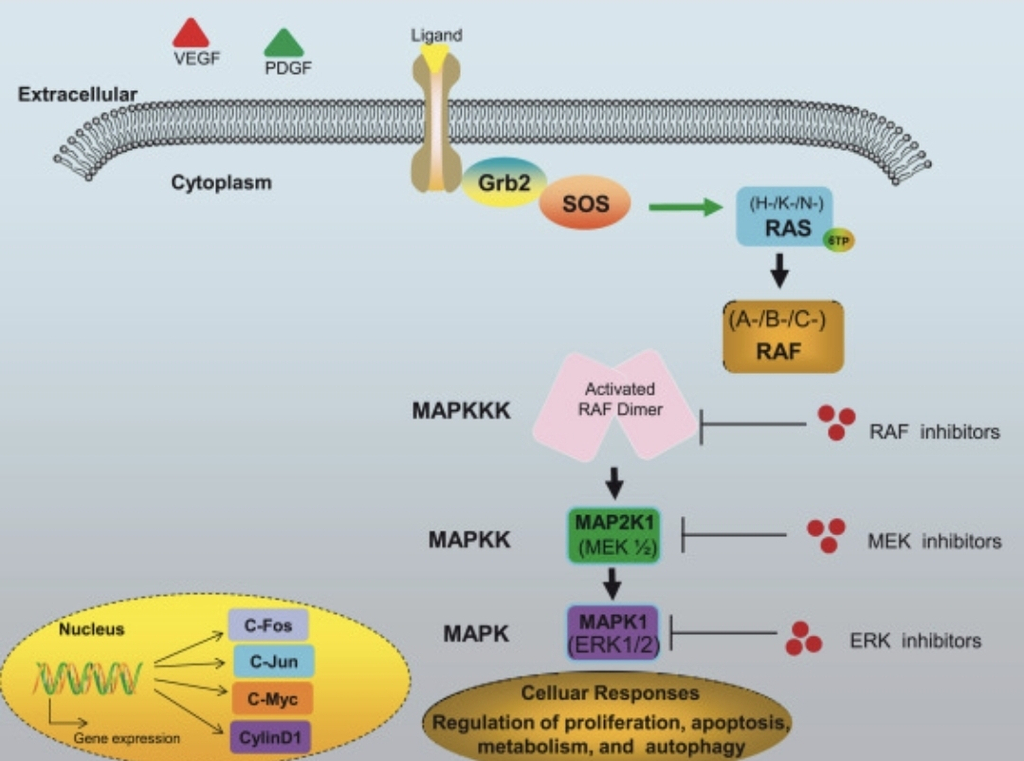
At the cellular level, the hypothesis leans heavily on the language of signal dilution and pathway interference. Transdermal water exposure is said to affect osmotic balance, aquaporin activity, and extracellular ionic gradients, which then allegedly propagate inward to disrupt chondrocyte hypertrophy. By this logic, pathways classically implicated in growth plate senescence—MAPK, STAT, Wnt/β-catenin—are not shut down directly, but rendered incoherent through chronic low-grade modulation. Ossification, which depends on tightly coordinated signaling and vascular invasion, is framed as vulnerable to even subtle systemic “noise.”
Screenshot_20260131_223655_ChatGPT.jpg

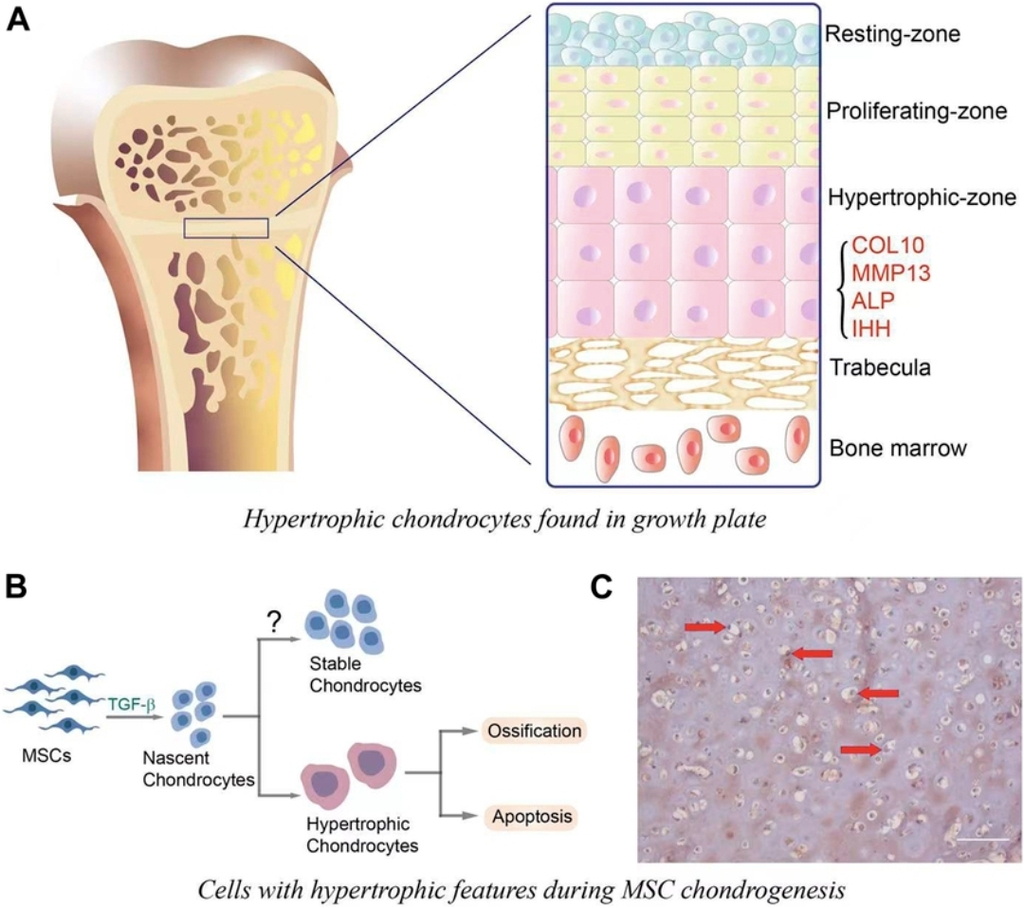
Another pillar of the theory is the idea that epiphyseal closure represents a shift toward a pro-mineralization, pro-vascular extracellular matrix state, and that maintaining an anti-mineral, low-inflammatory milieu could indefinitely delay this transition. Because bacteriostatic water is isotonic and minimally reactive, it is described as reinforcing homeostatic stasis rather than progression. In this narrative, osteogenic commitment is slowed not by force, but by the absence of a decisive biochemical push, leaving chondrocytes in a prolonged intermediate state between proliferation and terminal differentiation.
Screenshot_20260131_223619_ChatGPT.jpg

Taken as a whole, this model is internally elaborate but biologically ungrounded. Topical bacteriostatic water does not meaningfully penetrate to endocrine-relevant tissues, does not alter sex steroid signaling, and has no plausible mechanism for overriding genetically programmed growth plate fusion. Its appeal lies in the presentation: dense medical language, real signaling pathways, and the illusion of systemic control via a trivial intervention. As a case study, it illustrates how easily legitimate developmental biology can be reassembled into something that sounds precise, mechanistic, and “gatekept,” while remaining entirely detached from physiological reality.​
 

Biomaxx

Qui servat inopes
Joined
Oct 12, 2025
Posts
3,899
Reputation
8,863
⚠️⚠️⚠️⚠️
This is not to be shared at any cost
since this forum is rapidly growing, now is the best time to release this info, i am very fortunate to be informed of this and it shall not leave this thread.


TOPICAL BAC WATER

Topical bacteriostatic water has, in certain speculative discussions, been framed as an overlooked modulator of epiphyseal biology. The argument is usually constructed around the idea that repeated cutaneous exposure to a sterile, isotonic aqueous medium alters peripheral tissue signaling in a way that mimics a prolonged prepubertal internal environment. Skin is treated not as a passive barrier, but as an active neuroendocrine interface capable of influencing systemic developmental cues. Within this framing, growth plates are portrayed as responsive not only to hormones, but to diffuse environmental signals interpreted as indicators of developmental timing.

View attachment 25534

At the cellular level, the hypothesis leans heavily on the language of signal dilution and pathway interference. Transdermal water exposure is said to affect osmotic balance, aquaporin activity, and extracellular ionic gradients, which then allegedly propagate inward to disrupt chondrocyte hypertrophy. By this logic, pathways classically implicated in growth plate senescence—MAPK, STAT, Wnt/β-catenin—are not shut down directly, but rendered incoherent through chronic low-grade modulation. Ossification, which depends on tightly coordinated signaling and vascular invasion, is framed as vulnerable to even subtle systemic “noise.”
View attachment 25533

Another pillar of the theory is the idea that epiphyseal closure represents a shift toward a pro-mineralization, pro-vascular extracellular matrix state, and that maintaining an anti-mineral, low-inflammatory milieu could indefinitely delay this transition. Because bacteriostatic water is isotonic and minimally reactive, it is described as reinforcing homeostatic stasis rather than progression. In this narrative, osteogenic commitment is slowed not by force, but by the absence of a decisive biochemical push, leaving chondrocytes in a prolonged intermediate state between proliferation and terminal differentiation.

View attachment 25532

Taken as a whole, this model is internally elaborate but biologically ungrounded. Topical bacteriostatic water does not meaningfully penetrate to endocrine-relevant tissues, does not alter sex steroid signaling, and has no plausible mechanism for overriding genetically programmed growth plate fusion. Its appeal lies in the presentation: dense medical language, real signaling pathways, and the illusion of systemic control via a trivial intervention. As a case study, it illustrates how easily legitimate developmental biology can be reassembled into something that sounds precise, mechanistic, and “gatekept,” while remaining entirely detached from physiological reality.​
20260129_220228.jpg
 

Holy

ig bro
Joined
Jan 24, 2026
Posts
1,254
Reputation
4,031
⚠️⚠️⚠️⚠️
This is not to be shared at any cost
since this forum is rapidly growing, now is the best time to release this info, i am very fortunate to be informed of this and it shall not leave this thread.


TOPICAL BAC WATER

Topical bacteriostatic water has, in certain speculative discussions, been framed as an overlooked modulator of epiphyseal biology. The argument is usually constructed around the idea that repeated cutaneous exposure to a sterile, isotonic aqueous medium alters peripheral tissue signaling in a way that mimics a prolonged prepubertal internal environment. Skin is treated not as a passive barrier, but as an active neuroendocrine interface capable of influencing systemic developmental cues. Within this framing, growth plates are portrayed as responsive not only to hormones, but to diffuse environmental signals interpreted as indicators of developmental timing.

View attachment 25534

At the cellular level, the hypothesis leans heavily on the language of signal dilution and pathway interference. Transdermal water exposure is said to affect osmotic balance, aquaporin activity, and extracellular ionic gradients, which then allegedly propagate inward to disrupt chondrocyte hypertrophy. By this logic, pathways classically implicated in growth plate senescence—MAPK, STAT, Wnt/β-catenin—are not shut down directly, but rendered incoherent through chronic low-grade modulation. Ossification, which depends on tightly coordinated signaling and vascular invasion, is framed as vulnerable to even subtle systemic “noise.”
View attachment 25533

Another pillar of the theory is the idea that epiphyseal closure represents a shift toward a pro-mineralization, pro-vascular extracellular matrix state, and that maintaining an anti-mineral, low-inflammatory milieu could indefinitely delay this transition. Because bacteriostatic water is isotonic and minimally reactive, it is described as reinforcing homeostatic stasis rather than progression. In this narrative, osteogenic commitment is slowed not by force, but by the absence of a decisive biochemical push, leaving chondrocytes in a prolonged intermediate state between proliferation and terminal differentiation.

View attachment 25532

Taken as a whole, this model is internally elaborate but biologically ungrounded. Topical bacteriostatic water does not meaningfully penetrate to endocrine-relevant tissues, does not alter sex steroid signaling, and has no plausible mechanism for overriding genetically programmed growth plate fusion. Its appeal lies in the presentation: dense medical language, real signaling pathways, and the illusion of systemic control via a trivial intervention. As a case study, it illustrates how easily legitimate developmental biology can be reassembled into something that sounds precise, mechanistic, and “gatekept,” while remaining entirely detached from physiological reality.​
Thanks for the method bub hope tik tok doesnt catch on to this time to acsend to 7'10 chad
 

birthdefect

pray to the purple powder
Joined
Jan 7, 2026
Posts
1,416
Reputation
2,418
⚠️⚠️⚠️⚠️
This is not to be shared at any cost
since this forum is rapidly growing, now is the best time to release this info, i am very fortunate to be informed of this and it shall not leave this thread.


TOPICAL BAC WATER

Topical bacteriostatic water has, in certain speculative discussions, been framed as an overlooked modulator of epiphyseal biology. The argument is usually constructed around the idea that repeated cutaneous exposure to a sterile, isotonic aqueous medium alters peripheral tissue signaling in a way that mimics a prolonged prepubertal internal environment. Skin is treated not as a passive barrier, but as an active neuroendocrine interface capable of influencing systemic developmental cues. Within this framing, growth plates are portrayed as responsive not only to hormones, but to diffuse environmental signals interpreted as indicators of developmental timing.

View attachment 25534

At the cellular level, the hypothesis leans heavily on the language of signal dilution and pathway interference. Transdermal water exposure is said to affect osmotic balance, aquaporin activity, and extracellular ionic gradients, which then allegedly propagate inward to disrupt chondrocyte hypertrophy. By this logic, pathways classically implicated in growth plate senescence—MAPK, STAT, Wnt/β-catenin—are not shut down directly, but rendered incoherent through chronic low-grade modulation. Ossification, which depends on tightly coordinated signaling and vascular invasion, is framed as vulnerable to even subtle systemic “noise.”
View attachment 25533

Another pillar of the theory is the idea that epiphyseal closure represents a shift toward a pro-mineralization, pro-vascular extracellular matrix state, and that maintaining an anti-mineral, low-inflammatory milieu could indefinitely delay this transition. Because bacteriostatic water is isotonic and minimally reactive, it is described as reinforcing homeostatic stasis rather than progression. In this narrative, osteogenic commitment is slowed not by force, but by the absence of a decisive biochemical push, leaving chondrocytes in a prolonged intermediate state between proliferation and terminal differentiation.

View attachment 25532

Taken as a whole, this model is internally elaborate but biologically ungrounded. Topical bacteriostatic water does not meaningfully penetrate to endocrine-relevant tissues, does not alter sex steroid signaling, and has no plausible mechanism for overriding genetically programmed growth plate fusion. Its appeal lies in the presentation: dense medical language, real signaling pathways, and the illusion of systemic control via a trivial intervention. As a case study, it illustrates how easily legitimate developmental biology can be reassembled into something that sounds precise, mechanistic, and “gatekept,” while remaining entirely detached from physiological reality.​
bro this scared the fuck out of me i thought everything was gonna be spilled :cage:
 
Joined
Jan 7, 2026
Posts
1,078
Reputation
2,206
⚠️⚠️⚠️⚠️
This is not to be shared at any cost
since this forum is rapidly growing, now is the best time to release this info, i am very fortunate to be informed of this and it shall not leave this thread.


TOPICAL BAC WATER

Topical bacteriostatic water has, in certain speculative discussions, been framed as an overlooked modulator of epiphyseal biology. The argument is usually constructed around the idea that repeated cutaneous exposure to a sterile, isotonic aqueous medium alters peripheral tissue signaling in a way that mimics a prolonged prepubertal internal environment. Skin is treated not as a passive barrier, but as an active neuroendocrine interface capable of influencing systemic developmental cues. Within this framing, growth plates are portrayed as responsive not only to hormones, but to diffuse environmental signals interpreted as indicators of developmental timing.

View attachment 25534

At the cellular level, the hypothesis leans heavily on the language of signal dilution and pathway interference. Transdermal water exposure is said to affect osmotic balance, aquaporin activity, and extracellular ionic gradients, which then allegedly propagate inward to disrupt chondrocyte hypertrophy. By this logic, pathways classically implicated in growth plate senescence—MAPK, STAT, Wnt/β-catenin—are not shut down directly, but rendered incoherent through chronic low-grade modulation. Ossification, which depends on tightly coordinated signaling and vascular invasion, is framed as vulnerable to even subtle systemic “noise.”
View attachment 25533

Another pillar of the theory is the idea that epiphyseal closure represents a shift toward a pro-mineralization, pro-vascular extracellular matrix state, and that maintaining an anti-mineral, low-inflammatory milieu could indefinitely delay this transition. Because bacteriostatic water is isotonic and minimally reactive, it is described as reinforcing homeostatic stasis rather than progression. In this narrative, osteogenic commitment is slowed not by force, but by the absence of a decisive biochemical push, leaving chondrocytes in a prolonged intermediate state between proliferation and terminal differentiation.

View attachment 25532

Taken as a whole, this model is internally elaborate but biologically ungrounded. Topical bacteriostatic water does not meaningfully penetrate to endocrine-relevant tissues, does not alter sex steroid signaling, and has no plausible mechanism for overriding genetically programmed growth plate fusion. Its appeal lies in the presentation: dense medical language, real signaling pathways, and the illusion of systemic control via a trivial intervention. As a case study, it illustrates how easily legitimate developmental biology can be reassembled into something that sounds precise, mechanistic, and “gatekept,” while remaining entirely detached from physiological reality.​
I used bac water instead of lotion on my dick now I have 8 inch girth
 

FS51

Gone till the summer
Joined
Dec 25, 2025
Posts
3,291
Reputation
8,047
⚠️⚠️⚠️⚠️
This is not to be shared at any cost
since this forum is rapidly growing, now is the best time to release this info, i am very fortunate to be informed of this and it shall not leave this thread.


TOPICAL BAC WATER

Topical bacteriostatic water has, in certain speculative discussions, been framed as an overlooked modulator of epiphyseal biology. The argument is usually constructed around the idea that repeated cutaneous exposure to a sterile, isotonic aqueous medium alters peripheral tissue signaling in a way that mimics a prolonged prepubertal internal environment. Skin is treated not as a passive barrier, but as an active neuroendocrine interface capable of influencing systemic developmental cues. Within this framing, growth plates are portrayed as responsive not only to hormones, but to diffuse environmental signals interpreted as indicators of developmental timing.

View attachment 25534

At the cellular level, the hypothesis leans heavily on the language of signal dilution and pathway interference. Transdermal water exposure is said to affect osmotic balance, aquaporin activity, and extracellular ionic gradients, which then allegedly propagate inward to disrupt chondrocyte hypertrophy. By this logic, pathways classically implicated in growth plate senescence—MAPK, STAT, Wnt/β-catenin—are not shut down directly, but rendered incoherent through chronic low-grade modulation. Ossification, which depends on tightly coordinated signaling and vascular invasion, is framed as vulnerable to even subtle systemic “noise.”
View attachment 25533

Another pillar of the theory is the idea that epiphyseal closure represents a shift toward a pro-mineralization, pro-vascular extracellular matrix state, and that maintaining an anti-mineral, low-inflammatory milieu could indefinitely delay this transition. Because bacteriostatic water is isotonic and minimally reactive, it is described as reinforcing homeostatic stasis rather than progression. In this narrative, osteogenic commitment is slowed not by force, but by the absence of a decisive biochemical push, leaving chondrocytes in a prolonged intermediate state between proliferation and terminal differentiation.

View attachment 25532

Taken as a whole, this model is internally elaborate but biologically ungrounded. Topical bacteriostatic water does not meaningfully penetrate to endocrine-relevant tissues, does not alter sex steroid signaling, and has no plausible mechanism for overriding genetically programmed growth plate fusion. Its appeal lies in the presentation: dense medical language, real signaling pathways, and the illusion of systemic control via a trivial intervention. As a case study, it illustrates how easily legitimate developmental biology can be reassembled into something that sounds precise, mechanistic, and “gatekept,” while remaining entirely detached from physiological reality.​
botb?
 

zach63

Iron
Joined
Jan 2, 2026
Posts
235
Reputation
292
ok i finally got some after hiding it from my parents, ill update progress. (31yrs 5'1). How much should i massai jump?
 

Hyporoxin

Hyporoking
Joined
Nov 12, 2025
Posts
1,300
Reputation
4,601
woow, ts really work, i am currently drinking, swimming, injecting, rubbing it on my skin, i even put it in my anus and dick. also i'm doing masaai jumps for like 10 hours a day. and i grew from 4'4 to 6'7. ty bhaii
 

4psl

Neurodivergent incel
Joined
Nov 11, 2025
Posts
861
Reputation
1,614
Its been so long why no botb this is so dark triad psl thread
 

Users who are viewing this thread

shape1
shape2
shape3
shape4
shape5
shape6
Top