Achilles
Iron
- Joined
- Dec 24, 2025
- Posts
- 682
- Reputation
- 592
A yes all of this account and posts that I have made are about posture.
But y'all niggas why I have an obbession with posture ? Like is the posture so important ? Yes nga.
Now thought the years you could be 1 or 3 inches shorter becuase of your posture from staying on the phone, on the laptop,the posture than you stay on a chair,etc.
Also likely here are some sources that claim the height lost of bad posture:
"Did you know that up to three inches of your natural body height can be lost with poor posture? By practicing good posture, you can potentially regain your full height."
Source:https://www.parker.edu/the-chiropractic-stance-on-posture/
"It’s not uncommon to have clients walk into your office sporting a 12 pound head that’s migrated three inches forward of their shoulders. You know prior to palpation that their cervical extensors (semispinalis, splenii, longissimus and upper traps) are in a losing battle attempting to isometrically restrain 42 pounds against the unrelenting force of gravity"
Source:https://blog.erikdalton.com/forward-head-posture/
And the list continues on with much more:anterior pelvic lit,flat feet.
Now also a list of how many cm you have lost from bad posture:
1. Forward Head Posture (1–3 cm)
Head protrudes forward, compressing cervical spine.
2. Rounded Shoulders / Protracted Shoulders (0.5–2 cm)
Shoulders roll forward due to tight chest muscles.
3. Thoracic Kyphosis (Increased Upper Back Curve) (1–4 cm)
Excessive rounding of mid-back.
4. Lumbar Flexion / Flat Lower Back (1–2.5 cm)
Loss of natural lower back curve.
5. Hyperlordosis (Excessive Lumbar Curve) (0.5–2 cm)
Overarched lower back.
6. Anterior Pelvic Tilt (1–3 cm)
Pelvis tips forward, shortening spinal extension.
7. Posterior Pelvic Tilt (1–2 cm)
Pelvis tips backward, flattening lumbar curve.
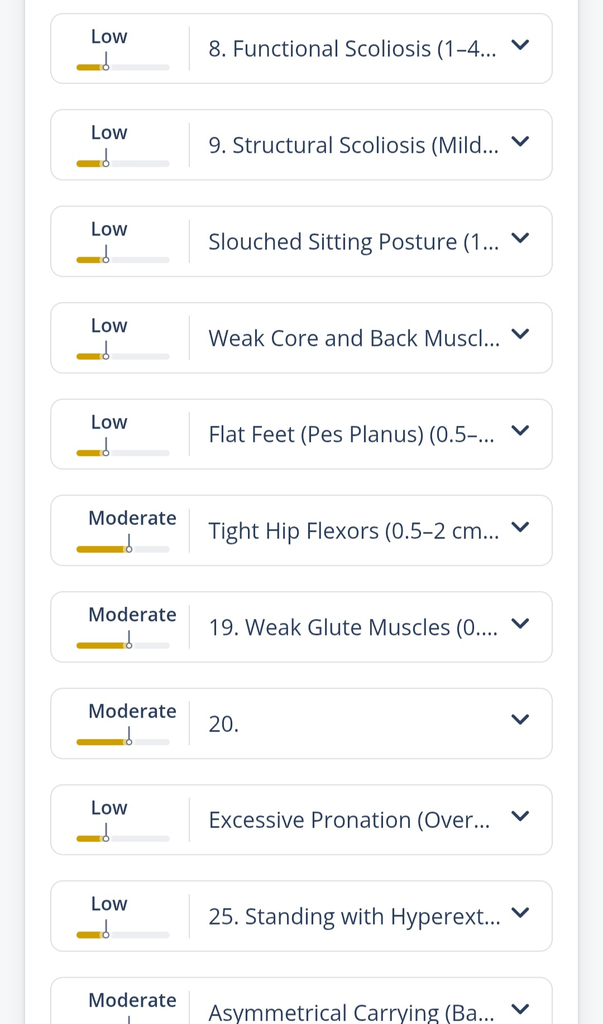
8. Functional Scoliosis (1–4 cm)
Temporary lateral curve from habits/imbalances.
9. Structural Scoliosis (Mild) (1–6 cm)
Early/mild fixed curve affecting alignment.
10. Uneven Shoulders (0.5–1.5 cm)
One shoulder higher, causing tilt.
11. Uneven Hips (0.5–2 cm)
Pelvic asymmetry.
12. Functional Leg-Length Discrepancy (0.5–2 cm)
Apparent difference from pelvic tilt or habits.
13. Poor Standing Habits (0.5–1.5 cm)
Weight shifting, locked knees, or slouching.
14. Slouched Sitting Posture (1–3 cm)
Prolonged rounding while seated.
15. Weak Core and Back Muscles (0.5–2 cm)
Lack of support for upright spine.
16. Flat Feet (Pes Planus) (0.5–1.5 cm)
Collapsed arches altering lower body chain.
17. Head Tilt / Lateral Neck Flexion (0.5–1 cm)
Sideways head lean.
18. Tight Hip Flexors (0.5–2 cm)
Shortened muscles pulling pelvis forward.
19. Weak Glute Muscles (0.5–1.5 cm)
Poor hip stabilization leading to tilt.
20. Prolonged Phone/Computer Use (Text Neck) (1–3 cm)
Extended forward head from screens.
21. High-Heel Wearing Habit (0.5–2 cm)
Shifts pelvis and alters alignment.
22. Excessive Pronation (Overpronation of Feet) (0.5–1.5 cm)
Feet rolling inward, causing chain reaction upward.
23. Tight Hamstrings (0.5–1.5 cm)
Pull pelvis posteriorly.
24. Tight Chest Muscles / Pectoral Tightness (1–2.5 cm)
Pulls shoulders forward.
25. Standing with Hyperextended (Locked) Knees (0.5–1 cm)
Pushes pelvis back, compressing spine.
26. Asymmetrical Carrying (Bag/Backpack on One Side) (0.5–1.5 cm)
Causes lateral tilt and uneven compression.
27. Poor Sleeping Posture (e.g., Fetal Position or High Pillow) (0.5–2 cm temporary/morning effect)
Curled position or neck strain leading to habitual rounding.
28. Weak Abdominal Muscles (0.5–1.5 cm)
Inability to support spine against gravity.
29. Inappropriate Footwear (e.g., Flip-Flops, Lack of Support) (0.5–1 cm)
Alters gait and postural chain.
30. Chronic Stress / Shoulder Hiking (0.5–1.5 cm)
Tension elevates shoulders and shortens neck.
31. Excessive Knee Flexion While Standing (0.5–1 cm)
Bent knees reduce full leg extension.
32. Genu Valgum / Genu Varum (Knock Knees / Bow Legs) (0.5–2 cm)
Knee misalignment affecting pelvic and spinal alignment.
33. Prolonged Standing with Weight on One Leg (0.5–1.5 cm)
Common habit causing hip drop and spinal curve.
34. Tight Calf Muscles (0.5–1 cm)
Limits ankle mobility, altering posture upward.
35. Forward Shoulder Posture (Scapular Protraction) (1–2 cm)
Emphasizes scapula position pulling shoulders forward.
36. Tight Hip Flexors (Iliopsoas, Rectus Femoris, TFL) (1–3 cm)
Primary driver of anterior pelvic tilt.
37. Weak Gluteus Maximus (Main Butt Muscle) (0.5–2 cm)
Fails to extend hips fully or counter anterior tilt.
38. Weak Gluteus Medius/Minimus (Side Butt Muscles) (0.5–1.5 cm)
Poor hip stabilization leads to lateral pelvic tilt.
39. Tight Hamstrings (Biceps Femoris, Semitendinosus, Semimembranosus) (0.5–2 cm)
Pulls pelvis into posterior tilt or limits leg extension.
40. Weak Hamstrings (0.5–1.5 cm)
Contributes to anterior pelvic tilt by failing to balance quads/hip flexors.
41. Tight Quadriceps (0.5–1.5 cm)
Can pull on pelvis or limit reciprocal inhibition.
42. Weak Quadriceps (0.5–1 cm)
Leads to excessive knee flexion while standing.
43. Tight Adductors (Inner Thigh) (0.5–1.5 cm)
Pulls hips inward, affecting pelvic stability.
44. Weak Adductors (0.5–1 cm)
Reduces pelvic control.
45. Tight/Overactive Abductors (TFL, IT Band) (0.5–1.5 cm)
Pulls on pelvis laterally or forward.
46. Weak Abductors (0.5–1 cm)
Causes hip drop or poor stabilization.
47. Tight Calves (Gastrocnemius, Soleus) (0.5–1.5 cm)
Limits ankle dorsiflexion, leading to forward lean.
48. Weak Calves/Tibialis Anterior (0.5–1 cm)
Poor ankle stability reduces full upright posture.
49. Tight Piriformis (0.3–1 cm indirect)
Can cause pelvic rotation or compensatory imbalances.
50. Weak/Tight Tibialis Posterior or Peroneals (0.3–0.8 cm)
Contribute to pronation/supination issues affecting the chain.
51. Tight/Overactive Quadratus Lumborum (QL) (0.5–1.5 cm)
Causes lateral pelvic tilt or hike (uneven hips).
Now how much can a human reclaim from posture ?
The maximum that a human can reclaim from his posture without doing surgeries is from 5 to 10 cm maximum.
Now also how do we fix the bad posture ?
For fixing the posture you need to train your:
-glutes
-feet
-head
-shoulders
-decompressing your spine
-your back
-etc
Now to have a pefect posture it will take about 6 to 12 months so you can get used to your new posture.


But y'all niggas why I have an obbession with posture ? Like is the posture so important ? Yes nga.
Now thought the years you could be 1 or 3 inches shorter becuase of your posture from staying on the phone, on the laptop,the posture than you stay on a chair,etc.
Also likely here are some sources that claim the height lost of bad posture:
"Did you know that up to three inches of your natural body height can be lost with poor posture? By practicing good posture, you can potentially regain your full height."
Source:https://www.parker.edu/the-chiropractic-stance-on-posture/
"It’s not uncommon to have clients walk into your office sporting a 12 pound head that’s migrated three inches forward of their shoulders. You know prior to palpation that their cervical extensors (semispinalis, splenii, longissimus and upper traps) are in a losing battle attempting to isometrically restrain 42 pounds against the unrelenting force of gravity"
Source:https://blog.erikdalton.com/forward-head-posture/
And the list continues on with much more:anterior pelvic lit,flat feet.
Now also a list of how many cm you have lost from bad posture:
1. Forward Head Posture (1–3 cm)
Head protrudes forward, compressing cervical spine.
2. Rounded Shoulders / Protracted Shoulders (0.5–2 cm)
Shoulders roll forward due to tight chest muscles.
3. Thoracic Kyphosis (Increased Upper Back Curve) (1–4 cm)
Excessive rounding of mid-back.
4. Lumbar Flexion / Flat Lower Back (1–2.5 cm)
Loss of natural lower back curve.
5. Hyperlordosis (Excessive Lumbar Curve) (0.5–2 cm)
Overarched lower back.
6. Anterior Pelvic Tilt (1–3 cm)
Pelvis tips forward, shortening spinal extension.
7. Posterior Pelvic Tilt (1–2 cm)
Pelvis tips backward, flattening lumbar curve.
8. Functional Scoliosis (1–4 cm)
Temporary lateral curve from habits/imbalances.
9. Structural Scoliosis (Mild) (1–6 cm)
Early/mild fixed curve affecting alignment.
10. Uneven Shoulders (0.5–1.5 cm)
One shoulder higher, causing tilt.
11. Uneven Hips (0.5–2 cm)
Pelvic asymmetry.
12. Functional Leg-Length Discrepancy (0.5–2 cm)
Apparent difference from pelvic tilt or habits.
13. Poor Standing Habits (0.5–1.5 cm)
Weight shifting, locked knees, or slouching.
14. Slouched Sitting Posture (1–3 cm)
Prolonged rounding while seated.
15. Weak Core and Back Muscles (0.5–2 cm)
Lack of support for upright spine.
16. Flat Feet (Pes Planus) (0.5–1.5 cm)
Collapsed arches altering lower body chain.
17. Head Tilt / Lateral Neck Flexion (0.5–1 cm)
Sideways head lean.
18. Tight Hip Flexors (0.5–2 cm)
Shortened muscles pulling pelvis forward.
19. Weak Glute Muscles (0.5–1.5 cm)
Poor hip stabilization leading to tilt.
20. Prolonged Phone/Computer Use (Text Neck) (1–3 cm)
Extended forward head from screens.
21. High-Heel Wearing Habit (0.5–2 cm)
Shifts pelvis and alters alignment.
22. Excessive Pronation (Overpronation of Feet) (0.5–1.5 cm)
Feet rolling inward, causing chain reaction upward.
23. Tight Hamstrings (0.5–1.5 cm)
Pull pelvis posteriorly.
24. Tight Chest Muscles / Pectoral Tightness (1–2.5 cm)
Pulls shoulders forward.
25. Standing with Hyperextended (Locked) Knees (0.5–1 cm)
Pushes pelvis back, compressing spine.
26. Asymmetrical Carrying (Bag/Backpack on One Side) (0.5–1.5 cm)
Causes lateral tilt and uneven compression.
27. Poor Sleeping Posture (e.g., Fetal Position or High Pillow) (0.5–2 cm temporary/morning effect)
Curled position or neck strain leading to habitual rounding.
28. Weak Abdominal Muscles (0.5–1.5 cm)
Inability to support spine against gravity.
29. Inappropriate Footwear (e.g., Flip-Flops, Lack of Support) (0.5–1 cm)
Alters gait and postural chain.
30. Chronic Stress / Shoulder Hiking (0.5–1.5 cm)
Tension elevates shoulders and shortens neck.
31. Excessive Knee Flexion While Standing (0.5–1 cm)
Bent knees reduce full leg extension.
32. Genu Valgum / Genu Varum (Knock Knees / Bow Legs) (0.5–2 cm)
Knee misalignment affecting pelvic and spinal alignment.
33. Prolonged Standing with Weight on One Leg (0.5–1.5 cm)
Common habit causing hip drop and spinal curve.
34. Tight Calf Muscles (0.5–1 cm)
Limits ankle mobility, altering posture upward.
35. Forward Shoulder Posture (Scapular Protraction) (1–2 cm)
Emphasizes scapula position pulling shoulders forward.
36. Tight Hip Flexors (Iliopsoas, Rectus Femoris, TFL) (1–3 cm)
Primary driver of anterior pelvic tilt.
37. Weak Gluteus Maximus (Main Butt Muscle) (0.5–2 cm)
Fails to extend hips fully or counter anterior tilt.
38. Weak Gluteus Medius/Minimus (Side Butt Muscles) (0.5–1.5 cm)
Poor hip stabilization leads to lateral pelvic tilt.
39. Tight Hamstrings (Biceps Femoris, Semitendinosus, Semimembranosus) (0.5–2 cm)
Pulls pelvis into posterior tilt or limits leg extension.
40. Weak Hamstrings (0.5–1.5 cm)
Contributes to anterior pelvic tilt by failing to balance quads/hip flexors.
41. Tight Quadriceps (0.5–1.5 cm)
Can pull on pelvis or limit reciprocal inhibition.
42. Weak Quadriceps (0.5–1 cm)
Leads to excessive knee flexion while standing.
43. Tight Adductors (Inner Thigh) (0.5–1.5 cm)
Pulls hips inward, affecting pelvic stability.
44. Weak Adductors (0.5–1 cm)
Reduces pelvic control.
45. Tight/Overactive Abductors (TFL, IT Band) (0.5–1.5 cm)
Pulls on pelvis laterally or forward.
46. Weak Abductors (0.5–1 cm)
Causes hip drop or poor stabilization.
47. Tight Calves (Gastrocnemius, Soleus) (0.5–1.5 cm)
Limits ankle dorsiflexion, leading to forward lean.
48. Weak Calves/Tibialis Anterior (0.5–1 cm)
Poor ankle stability reduces full upright posture.
49. Tight Piriformis (0.3–1 cm indirect)
Can cause pelvic rotation or compensatory imbalances.
50. Weak/Tight Tibialis Posterior or Peroneals (0.3–0.8 cm)
Contribute to pronation/supination issues affecting the chain.
51. Tight/Overactive Quadratus Lumborum (QL) (0.5–1.5 cm)
Causes lateral pelvic tilt or hike (uneven hips).
Now how much can a human reclaim from posture ?
The maximum that a human can reclaim from his posture without doing surgeries is from 5 to 10 cm maximum.
Now also how do we fix the bad posture ?
For fixing the posture you need to train your:
-glutes
-feet
-head
-shoulders
-decompressing your spine
-your back
-etc
Now to have a pefect posture it will take about 6 to 12 months so you can get used to your new posture.