

edcell:TL
Banned
- Joined
- Jun 18, 2026
- Posts
- 414
- Reputation
- 425
Before I get into this thread, I just want to say that this is my first time making an educational thread. If you notice any mistakes or think there's anything I could do better, please let me know! I'm always open to feedback.
Carotenoids are natural pigments found in foods that can build up in your skin over time. They’re what can give your skin a warmer, more golden tone and make your complexion look healthier and more vibrant.They also act as antioxidants, helping protect your skin from oxidative stress. The interesting thing is that each carotenoid works differently; some are better for adding warmth and colour, while others are more focused on skin health.
For this thread, I’m only covering astaxanthin, lycopene, and beta-carotene because these are the ones I’ve personally used and probably the best in terms of a look's perspective.
Keep in mind, these aren’t going to fix your skin or magically change your appearance overnight. But if you’re wanting a warmer, more vibrant complexion, they can be a nice addition alongside your other supplements.
1. Beta-Carotene
Beta-carotene is probably one of the most well-known carotenoids out there. You’ll find it in foods like carrots, sweet potatoes, and leafy greens. Your body can also convert it into vitamin A, which plays a big role in keeping your skin healthy.The interesting part is that beta-carotene can actually build up in your skin over time, especially in the outer layers. This is what can give your skin that warmer, slightly golden/orange glow. It’s not a tan, and it doesn’t work by increasing melanin; it’s more like adding a bit of natural pigment to your complexion.
Beta-carotene also has antioxidant properties, which is another reason people are interested in it for skin health.
How to Dose Beta-Carotene Effectively?
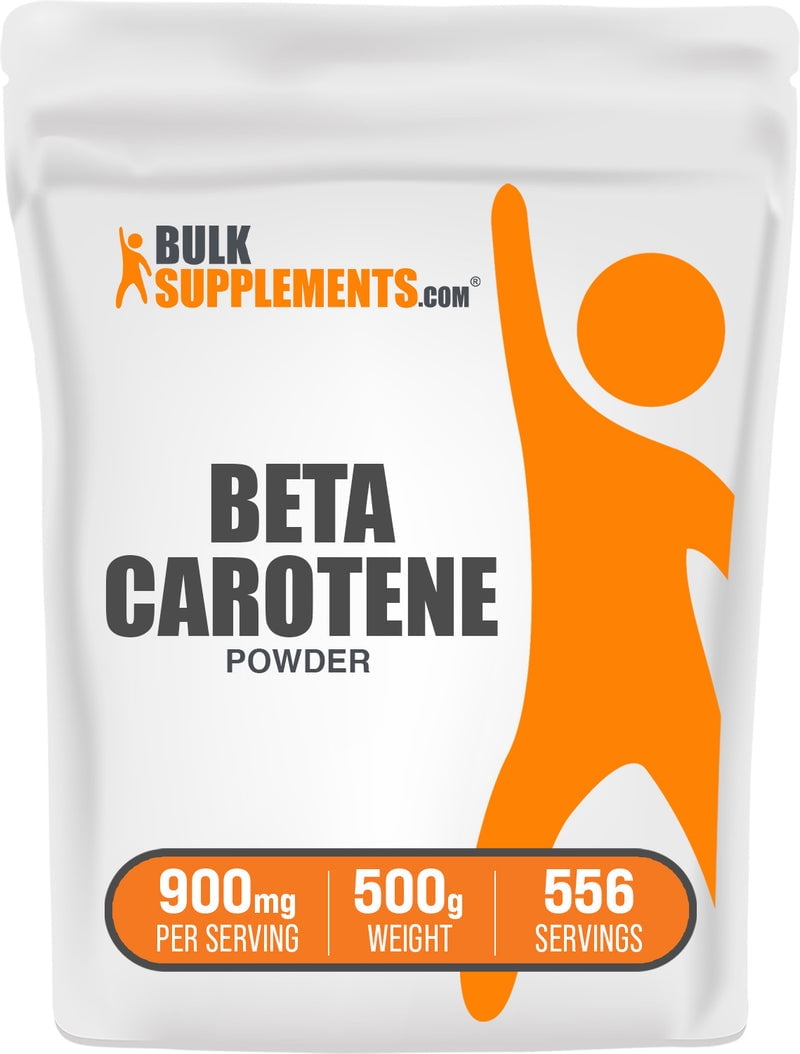
Unless you want to eat a ridiculous amount of carrots every day, I would recommend looking into a supplement instead. I see a lot of people using capsules, but personally I think they’re not the best option because they’re usually more expensive and give you much less beta-carotene per dollar compared to bulk powdered beta-carotene, which is what I prefer.I’ve been using around one tablespoon of it for the past 3 months, which is definitely more than necessary because it’s roughly the same amount of beta-carotene as eating around 12 carrots. Personally, I’ve only noticed positive effects, and it made my skin develop a much warmer, more orange/golden tone in a relatively short amount of time. However, I would recommend doing your own research and finding a serving size that works for you, because more is not always better.
High-dose beta-carotene side effects
High-dose beta-carotene can have some downsides. Some people end up with a yellowish, sickly-looking color instead of a healthy golden glow if they take too much. It can also cause stomach issues, and there’s the increased lung cancer risk linked to high-dose supplements in smokers.
Lycopene:
Lycopene is basically a red pigment found in foods like tomatoes, watermelon, and grapefruit. It’s also a pretty strong antioxidant, meaning it helps protect your skin from damage caused by things like UV exposure and everyday stress. When it comes to looks, lycopene isn’t really about giving you a crazy colour change like beta-carotene. It’s more about making your skin look healthier, more even, and less dull over time by supporting overall skin quality.
How to dose lycopene effectively:
I use bulk supplements for this as well because of the price point. I’ll usually take around one teaspoon mixed in with my beta-carotene. I haven’t really noticed a huge difference from it yet since I’ve only been using it for a few weeks, but this is definitely one of those long-term supplements where the effects are more subtle rather than something that’s going to completely change your appearance overnight.I still think it’s worth taking because of its benefits for overall skin health, and it pairs really well with beta-carotene because of its slight warm reddish undertone. I’d definitely recommend adding it to your “collection” if you’re already focusing on skin quality, but if you’re expecting some crazy dramatic transformation, you’re probably going to be disappointed.
Astaxanthin:
If you’re taking astaxanthin for looks, it’s more of a long-term supplement rather than something that’s going to give you crazy noticeable changes overnight. It’s pretty similar to lycopene in that way the benefits are more about slowly improving your skin quality over time rather than changing your appearance fast. Astaxanthin is mainly focused on helping your skin look healthier by supporting things like hydration, smoothness, and elasticity. It’s not really going to give you a golden color like beta-carotene, but it can work well alongside it by improving the overall quality and appearance of your skin.
How to Dose Astaxanthin Effectively:
I personally mega-dose astaxanthin and take 24 mg. I’ve had no problems with it and have been taking it for a few months now. My skin and coloring have improved a lot recently, but I’m not going to lie and say it was definitely the astaxanthin because I’ve been taking so many other things for my skin that it would be impossible to know what actually made the biggest difference and what didn’t do much.I would still recommend taking astaxanthin because of its many amazing properties for long-term skin health. The only downside I can really think of is the price, so if you’re going to buy it, make sure you’re able to keep up with it consistently in the long run.
I hope you guys found this thread useful! And yes, ik this is all water. I literally had no time to make this, so I’m sorry for the poor design and I have no idea how the text size ended up all different.